1 Harbin Institute of Technology, Shenzhen2 The Hong Kong University of Science and
Technology
* Equal contribution · † Corresponding authors
Editing with fidelity.
Change what you mean. Preserve what you don't.
EditInfinity brings text-driven image editing to
Infinity, a binary-quantized generative model.
Instead of relying on approximate inversion, it uses the source
image's exact quantized representations as supervision for faithful
reconstruction.
A learnable prompt refines textual conditioning, lightweight LoRA
adaptation preserves visual style, and
holistic smoothing blends source and target tokens
across scales. Together, they support precise semantic edits with
consistent structure and background.
Exact supervision.
Recover source-image details with ground-truth quantized tokens.
Lightweight updates.
Optimize a learnable prompt and LoRA, keeping the base model
frozen.
Coherent changes.
Blend source and edited representations for smooth, faithful
results.
A closer look at the edits.
Choose an example, then drag the divider or use the arrow keys to
compare the source and edited images.
SourceEditInfinity
‹ ›
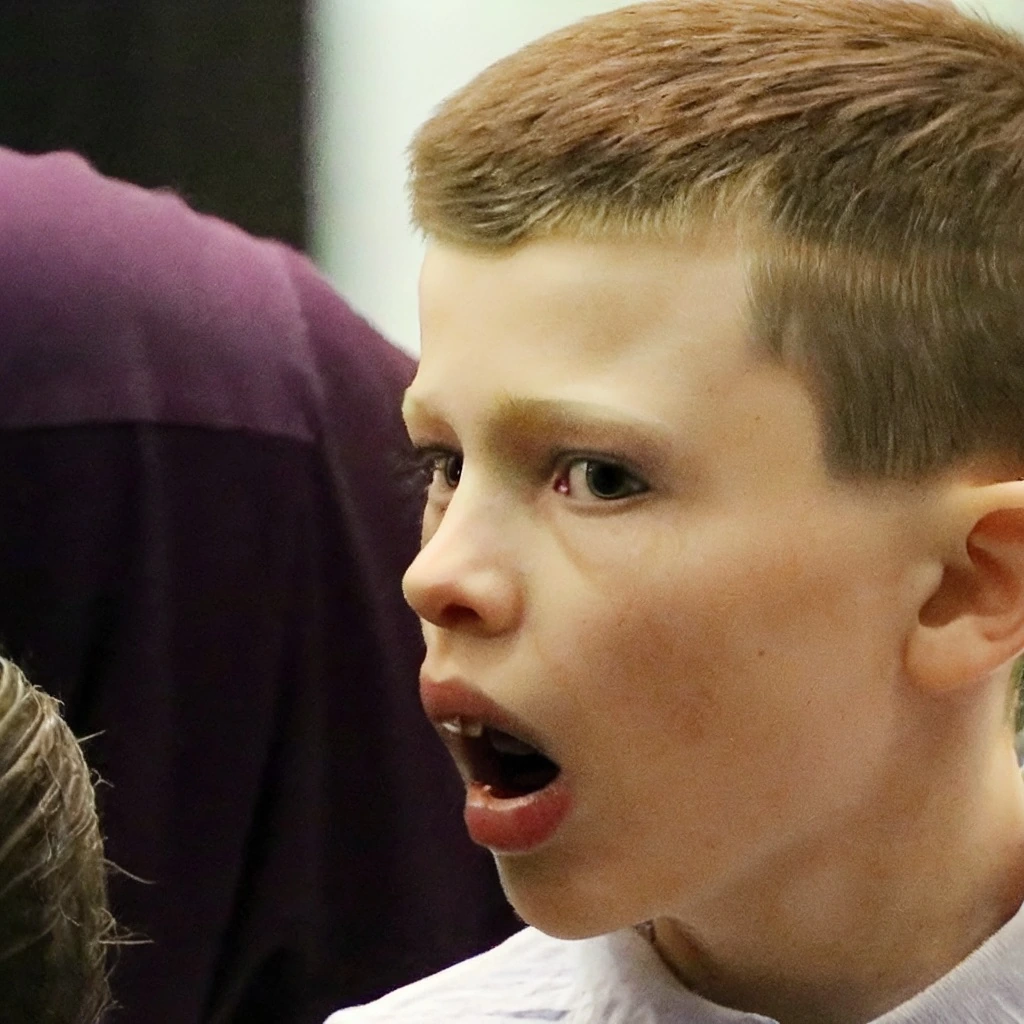
Thoughtful → surprised
Full-image editing
Target prompt
Light-skinned boy with short hair looking surprised
Explore all nine PIE-Bench editing tasks
+
Adding and deleting objects; changing object, content, pose,
color, material, background, and style.
From exact tokens to precise edits.
The method follows two stages: reconstruct the source image, then edit
it with controlled token blending.
I
Image inversion with exact supervision.
Quantize. Encode the source image into exact
multi-scale tokens.
Rectify. Optimize a learnable prompt under direct
token supervision.
Preserve. Freeze the prompt and adapt the FFN
layers with LoRA to retain style and detail.
II
Image editing with holistic smoothing.
Generate tokens conditioned on the target prompt and optimized
learnable prompt. At each scale, a piecewise linear smoothing kernel
blends the edited representation with source tokens. The blended
tokens guide subsequent generation and are decoded into the final
image.
Why both the learnable prompt and LoRA?
+
Faithfulness, measured.
Evaluated on
700 PIE-Bench cases across nine editing types,
EditInfinity achieves the best reported result across all seven
metrics in the paper's main comparison.
27.95dBBackground PSNR ↑
92.12Background SSIM ×10² ↑
43.2%User preference
PIE-Bench comparison · Table 1 from the paper
Background preservation
CLIP similarity
Quality
Method
PSNR ↑
LPIPS ↓×10³
MSE ↓×10⁴
SSIM ↑×10²
Whole ↑
Edited ↑
IR ↑×10
P2P
17.87
208.80
219.88
71.14
25.01
22.44
0.017
MasaCtrl
22.17
106.62
86.97
79.67
23.96
21.16
−1.66
P2P-Zero
20.44
172.22
144.12
74.67
22.80
20.54
−6.59
NTI
27.03
60.67
35.86
84.11
24.75
21.86
2.77
PnP-Inv
22.46
106.06
80.45
79.68
25.41
22.62
4.17
NP
26.21
69.01
39.73
83.40
24.61
21.87
2.42
StableFlow
21.64
92.28
115.21
84.94
24.65
21.70
1.88
RF-Edit
23.22
131.18
75.00
81.44
25.22
22.40
5.18
Gemini 2.0
23.22
105.17
188.63
81.10
25.28
22.28
5.30
EditInfinity
27.95
33.08
24.27
92.12
26.41
23.47
5.88
↑ Higher is better. ↓ Lower is better. IR = ImageReward.
Task-level comparisons and a study with 60 volunteers. EditInfinity
received 43.2% of user preferences.
Make your own edits.
The released code includes full-image editing, background preservation
with a supplied mask, and automatic attention-based mask generation.
@article{wang2026editinfinity,
  title={Editinfinity: Image editing with binary-quantized generative models},
  author={Wang, Jiahuan and Chen, Yuxin and Yu, Jun and Lu, Guangming and Pei, Wenjie},
  journal={Advances in Neural Information Processing Systems},
  volume={38},
  pages={50763--50790},
  year={2026}
}